
Tennis Everyone?
An upcoming court closure prompts the perennial questions: Why is it so hard to play tennis in New York? And can we blame Zendaya?

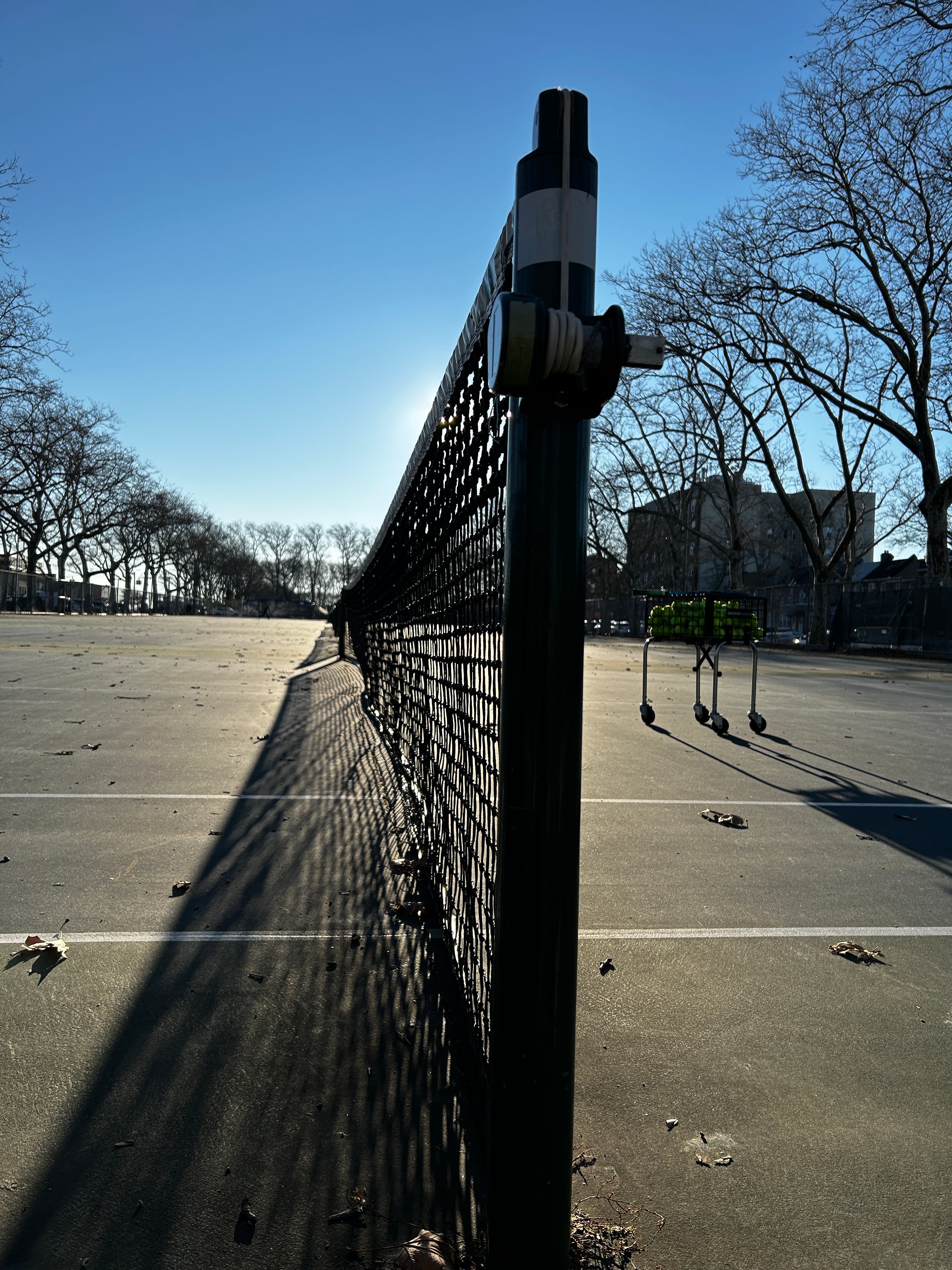
New York has never been an easy place to play tennis. Courts are scarce, expensive, and sought after by the hordes of Alphas the sport—and the city—tends to attract. I’m sure you know the type. They’re the ones arriving, laptop and overnight oats in hand, at 5:15 on a Wednesday morning to score a 7AM public court so they can play before their first Zoom. Or they are people who have already grabbed a big enough piece of the pie to liberate themselves from the drudgery and hassle of accessing public courts. They are able to regularly fork over court fees, which, at least at Vanderbilt Tennis Club high above Grand Central, peak on weeknights at $418 per hour. (That’s exactly 18 more dollars than Uncle Karen paid per month for an illegal one-bedroom with crumbling plaster walls and WeeGee-era police lock on Perry Street, but that was a different New York.)
So you’ve met the Alphas. What’s left are the rest of us—people whose love of tennis is outmatched by our desire to live in the City of New York. It’s a concession, for sure, one of many we silently agreed to when we moved here. It’s buried somewhere in the New York Terms of Use Agreement each of us willfully signed, but was so titillated by the prospect of actually living here that we blew off the fine print. Somewhere in that fine print—along with a paragraph about hyperactive all-season radiators and human shit on the C-train—is a disclosure about the sport of tennis never being easy to play again.
Yes, if the game itself didn’t produce enough despair and frustration, actually getting a court for one hour to play it will. But is it actually harder to play here than in other places? Karen had always assumed it was, but then he’d never actually lived in any other real city, so how would he know?
Are there fewer courts in New York than in other cities?
Okay, this will require some math. Let’s start with what Karen has always thought of as the city’s hostile court-to-resident ratio, which Claude calculates at roughly one public court court per 17,200 residents. Compare that admittedly rough estimate to…
Portland, OR, which boasts one public court per 2,038 residents but also has more than 150+ days of rain. (New York has ≈130.)
Or to Austin, Texas, which typically has fewer than 60 rainy days and one public court per 1,923 residents, which sounds great until you remember one of them is Alex Jones.
Or to Madison, Wisconsin with a whopping one court per 1,660 residents, but a solid five month-long snow season.
Los Angeles, mind you, seems to have an even more unfriendly court to resident ratio than New York (one court per 31,200) but practically every day in LA is tennis weather, and they probably have thousands more private courts to make up for it. (Karen saw them himself on a hike up Runyon Canyon his L.A. friends insisted was a fun thing to do.)
Okay, so New York has a public court scarcity, but is the sport more popular than it used to be?
Yes, but don’t take Karen’s word for it. The story of tennis’ popularity is a familiar one: Covid happened, everyone had roughly twice as much free time as they did when they could eat and drink freely in public with their friends, and so people sought out individual sports you could play outside. That spike in participation—an estimated increase in 5% to 8% since 2021—never went away. And while those new numbers don’t include many hard core players—the people whose summer vacations revolve around the Cincinnati Open and whose racquet stringer doubles as a clothesline in their living rooms—even casual players can take a court you had your heart set on using.
Break Point, the Netflix docuseries Karen never got into for some reason, gets a little of the blame. While it didn’t do for tennis what Drive to Survive did for F1, it introduced audiences to a crop of young, sometimes American, players who may never vanquish Sinner or Alcaraz but date other famous people the way a tennis player is supposed to. Karen knows this from Deux Moi, of course, which will occasionally feature someone like Taylor Fritz either arriving or exiting a restaurant with someone else famous or what passes for it these days.
But it isn’t Emma or Coco, big Foe or Carlos that’s most responsible for overheated, oversubscribed, overpriced state of amateur tennis. No, they don’t. In fact, no one single person shoulders more of the blame than Zendaya.
Come on. It’s Zendaya’s fault?
Yes, it is. Karen knows this because he has two children, who could hardly be more different in taste and cultural allegiances, and yet both of them happily, reliably show up to see everything Zendaya shows up in. And a few years ago, she showed up in Challengers, a tense tennis love triangle that made $100 million at the box office and became the most important pop culture emblem since Farrah Fawcett’s two-handed backhand in the opening credits of Charlie’s Angels. (And don’t even start with the Infinite Jest discourse.) Why there haven’t been a half dozen great tennis movies or TV shows by now, I’ll never know, but there really haven’t. It may have to do with the difficulty of presenting that actual play in a convincingly professional way, something Challengers didn’t waste much time on, opting instead to capture the off-court jousting—hot people betraying and tormenting each other.
Most tennis people (of whom I am not quite one) had some real, uh, challenges in overlooking the inauthenticity of Challengers, but those people were already signing up for courts and buying quarterfinals tickets to the U.S. Open. It’s the other several million people who saw Challengers and suddenly thought tennis was sexy and cool and psychologically dangerous enough for them to buy a Babalot,and allow the sport of tennis to begin enriching and ruining their lives, too.
Anyway, Zendaya admits this herself. She says actual tennis players have thanked her for “making tennis sexy. A lot of people have tried to get into tennis now, so I think that’s fun.” Oh, is it?
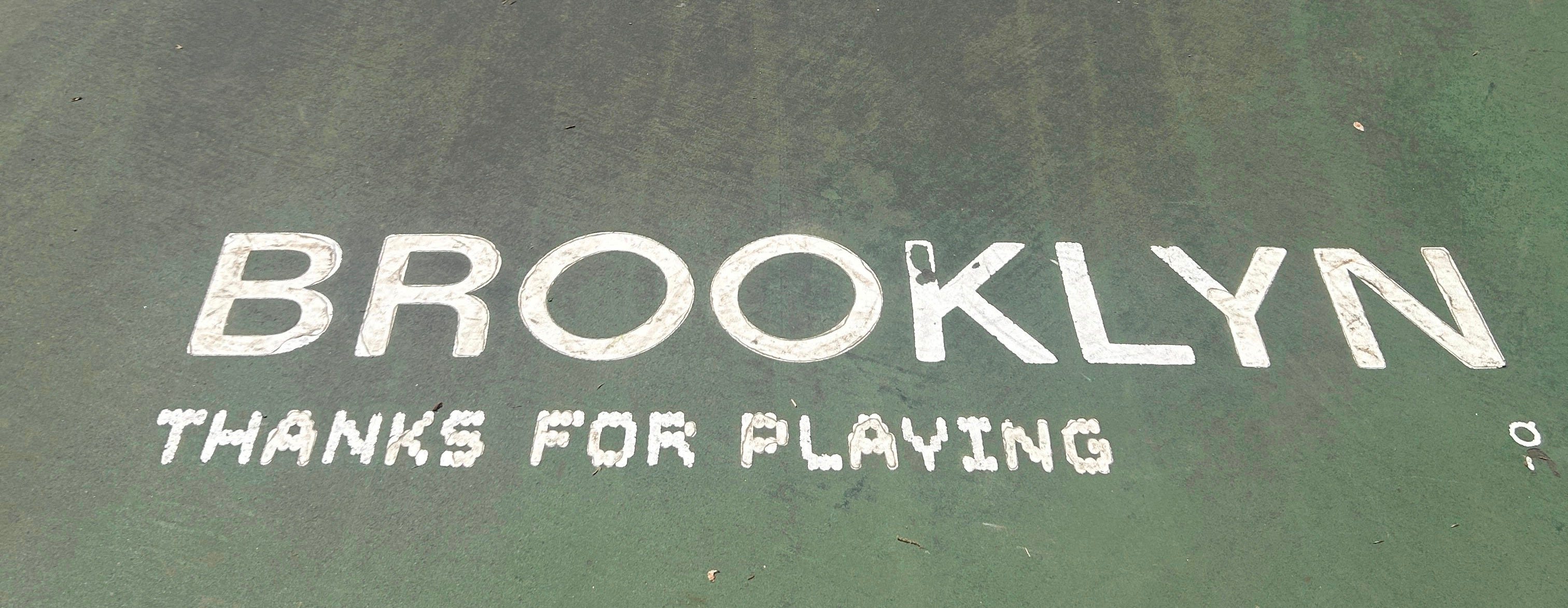
And if so, is that popularity translating to actual demand for courts and exacerbating court scarcity?
This is a hard claim to actually quantify, but it’s easy to make a case. First, there are the waits for court times. A few years ago, Karen was reliably told by a generous early riser he would sometimes hit with that if he got in line to sign up at Brooklyn’s Fort Greene Park by 6:35, he’d usually be able to score an 8AM or 9AM court. (You’d need to come earlier to score a coveted 7AM.) Now, I’m told it’s much earlier.
Another guy Karen plays with who we’ll call Jim, because his name is Jim, pointed to the growth in the Ft. Greene tennis text group. When he first joined in 2020 he remembers fewer than 900 members. Now there are close to 3,000. Is that proof of a rising demand for New York courts or just evidence of community group text functioning the way a community text is supposed to function?
Notably, when Uncle Karen was getting his $100 dollar New York City Parks Department permit at Paragon last month, he asked the goth kid working the permit counter, if he’d seen an uptick in permit sales this year over last. “Yeah,” he replied. He didn’t even pause to think about it. Just, yeah.
Will this summer be more painful than others?
There’s a reason Karen has focused on the six desirable courts at Ft. Greene Park, beyond the obvious—that Karen is deeply self-interested and is living nearby. For one, the quality of play is solid: most mornings you can find people playing as well as most D1 college players do. Karen doesn’t know who they are or where they learned to play but they choose to play at Ft. Green Park. And the courts are famously in demand, as they fill a six-court hole in the mostly underserved and increasingly populous triangular span of Brooklyn between the ten courts at McCarren Park (not McKaren, alas, though one can dream) and the eleven at Prospect Park and the other eleven at Lincoln Terrace. (Leif Ericson, in Bay Ridge is a permit-free, wild west where whole families camp out for days at a time.)
Next week, all of Ft. Greene’s six courts will begin the process of resurfacing, taking them out of commission for what could be as few as three weeks but as many as—come on, these are public tennis courts, here’s no saying how long resurfacing could actually require. On the upside, late May is an ideal time to give well-pounded knees and over rotated shoulders a break and pursue some indoor activities for a change. Also, there are six brand new courts that just opened on the other side of the river. I’m told the Brian Watkins Tennis Center is now open and accessible via pedestrian bridge from Delancey Street. Now you can start stressing about how to score an hour on one of those.
Petition to rename it McKAREN park! This was ACE. (That’s a tennis term, right?) Point is, you kept this non tennis player engaged. 🎾